
Automotive Industry
Laser Solutions for Automotive Manufacturing | HGLaser


 August 28, 2026
 675 Viewed
The rapid expansion of artificial intelligence (AI) applications is accelerating global demand for high-performance data centers, creating new challenges for server rack manufacturing. As AI computing systems require higher processing capacity, modern server racks are becoming larger, stronger, and more complex, with stricter requirements for structural accuracy, airflow design, and thermal management. Behind every advanced AI data center is a reliable manufacturing process based on precision sheet metal fabrication.
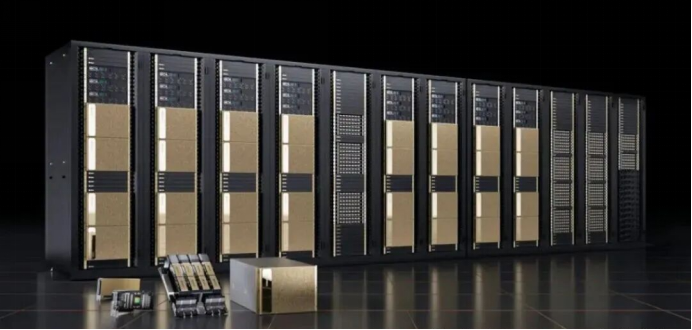
AI server rack manufacturing mainly involves the processing of steel, stainless steel, and aluminum sheets into cabinet frames, panels, doors, brackets, and structural components. Compared with traditional server cabinets, AI-focused infrastructure requires higher dimensional accuracy and more customized designs to support high-density GPU systems, power distribution units, and liquid cooling solutions. This trend is driving manufacturers to adopt advanced fiber laser cutting machines for faster, more flexible, and more precise sheet metal production.
A complete AI server rack manufacturing process typically includes sheet metal cutting, bending, welding, surface treatment, and final assembly. Among these steps, laser cutting plays a critical role in determining production efficiency and component quality. High-precision cutting ensures accurate mounting holes, ventilation structures, and complex contours, reducing downstream adjustment and improving assembly consistency.
For manufacturers producing data center cabinets and server rack enclosures, traditional processing methods often face limitations in flexibility, accuracy, and production efficiency. AI infrastructure projects require shorter delivery cycles and frequent design adjustments, making sheet metal laser cutting machines an ideal solution for modern production environments.
A fiber laser cutting machine for server rack manufacturing provides several advantages in processing cabinet components. The high-energy laser beam enables fast cutting of carbon steel, stainless steel, and aluminum sheets with clean edges and minimal deformation. This allows manufacturers to produce rack panels, cabinet doors, side covers, and internal structural parts with consistent quality.
In addition, laser cutting technology supports intelligent production through digital programming. CAD drawings can be directly converted into cutting programs, allowing manufacturers to quickly switch between different cabinet designs without extensive tooling changes. This flexibility is especially valuable for AI data center equipment, where customized rack structures and cooling configurations are becoming increasingly common.
For large-scale production, a high-speed fiber laser cutting machine can significantly improve material utilization and reduce processing time. Automated loading and unloading systems, intelligent nesting software, and production data management further enhance manufacturing efficiency, helping companies achieve stable output while controlling production costs.
As AI server racks continue to evolve toward higher power density and more complex structures, precision sheet metal fabrication capabilities will become a key factor in maintaining competitive manufacturing performance.
HGLaser Marvel PLUS Series dual-exchange platform fiber laser cutting machine is a core solution for sheet metal processing of AI server cabinets. It is designed for high-volume cutting of carbon steel and stainless steel thin plates used in computing power cabinets, meeting the processing requirements of complex sheet metal components such as server chassis frames, mounting brackets, ventilation holes, and installation interfaces.
With a power range of 1,000–12,000W and multiple processing formats from 3015 to 12025mm, the machine delivers a repeat positioning accuracy of up to 0.03mm and acceleration of 1.2G. The dual-exchange worktable enables simultaneous loading/unloading and cutting operations, significantly reducing machine idle time and improving production efficiency.
The hollow bed structure combined with a segmented dust extraction system ensures long-term stability during continuous mass production. The equipment can complete one-time forming of irregular cabinet contours, dense hole patterns, and precision slots, featuring narrow kerfs, low thermal deformation, and no need for secondary grinding. Compatible with intelligent nesting and automatic layout optimization, it improves material utilization and reduces production costs.
Supporting intelligent connectivity, the GF PLUS Series can be integrated with automated loading and unloading production lines, adapting to flexible manufacturing scenarios ranging from multi-variety, small-batch production to large-scale mass production of AI server cabinets. By reducing manual intervention and ensuring consistent dimensional accuracy of cabinet components, the machine is widely applied in sheet metal manufacturing for computing hardware enclosures and server cabinet production.
The future of AI infrastructure relies on advanced manufacturing of essential hardware components. Server racks, electrical cabinets, and cooling enclosures require precise fabrication for strength, accuracy, and reliability.
Modern industrial laser cutting machines enable efficient production of complex sheet metal parts, including panels, frames, ventilation structures, and cable systems. For server rack sheet metal fabrication, fiber laser technology improves speed, precision, and flexibility, helping manufacturers meet growing demands from AI computing, cloud services, and data centers.
 share
share


