
Automotive Industry
Laser Solutions for Automotive Manufacturing | HGLaser


 September 16, 2026
 7 Viewed
A BESS assembly line is the manufacturing backbone for converting qualified battery cells into reliable energy storage modules and PACKs. As battery energy storage systems are increasingly deployed for grid storage, renewable energy integration, commercial and industrial applications, manufacturers need more than high production speed. They need consistent assembly quality, controlled electrical connections, reliable thermal management, and complete production traceability. A well-designed BESS assembly line connects these requirements into one controlled manufacturing process.
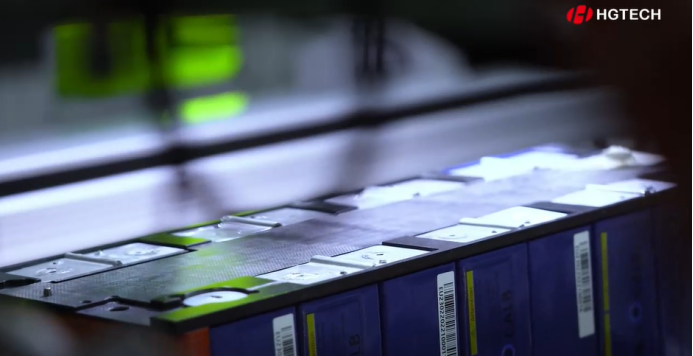
Unlike cell manufacturing, which covers electrode production, cell assembly, electrolyte filling, and formation, a BESS module and PACK production line begins with qualified cells and focuses on downstream integration. The process can include cell inspection and sorting, module stacking, mechanical fixation, busbar or terminal welding, insulation protection, BMS integration, PACK assembly, and end-of-line testing. The exact configuration depends on cell format, module architecture, PACK design, production volume, and required automation level.
For manufacturers planning an energy storage battery module assembly line, process consistency is particularly important because variations introduced during module or PACK assembly can affect electrical performance and long-term reliability. Industrial lithium batteries used in stationary applications are also covered by IEC 62619, which specifies safety requirements and tests for secondary lithium cells and batteries used in industrial applications, including stationary energy storage.
A modern BESS assembly line should be designed around the complete production flow rather than individual machines. At the front end, incoming cells can be inspected, electrically tested, graded, and matched before entering module assembly. This stage helps establish cell consistency before cells are combined into larger battery units.
The module assembly stage typically involves cell positioning and stacking, compression or structural fixation, electrical connection, welding, insulation treatment, and sensing or BMS-related assembly. Welding quality is especially important because electrical joints must provide stable conductivity while meeting the mechanical and thermal requirements of the application. Depending on the battery design, laser welding can be integrated into busbar, terminal, or other precision joining processes.
After module assembly, modules are integrated into the PACK enclosure together with components such as the BMS, wiring harnesses, thermal management components, and protective structures. Depending on the design, the BESS battery pack assembly line may also include cooling-system checks, insulation testing, air-tightness testing, electrical testing, and other process-specific inspections.
End-of-line testing is a critical part of an automated BESS assembly line. Instead of treating testing as a final quality gate only, manufacturers can connect test results with production records through barcode or MES-based traceability. This allows key process data, component information, and test results to be associated with an individual module or PACK. Such traceability becomes increasingly valuable when production volumes increase and manufacturers need to identify process deviations quickly.
Selecting a BESS assembly line should start with the battery architecture and target production requirements rather than simply choosing the highest level of automation. Cell format, module dimensions, PACK structure, welding technology, thermal management design, takt time, product changeover requirements, and testing strategy all influence the appropriate line configuration.
For manufacturers producing different energy storage products, modular line architecture can provide greater flexibility for future product changes and capacity expansion. Automation can also be introduced selectively at processes where consistency, precision, or traceability has the greatest impact. The objective is not automation for its own sake, but a balanced production system that connects material handling, assembly, welding, testing, and data management.
Safety and compliance should also be considered during BESS assembly line planning. UL 9540 addresses the safety of complete energy storage systems and equipment, while UL 9540A provides a test method for evaluating thermal runaway fire propagation in battery energy storage systems. NFPA 855 addresses the installation of stationary energy storage systems. These standards and requirements highlight why battery production, system integration, and safety evaluation need to be considered together rather than as isolated steps.
The HGLaser Energy Storage Module PACK Automated Production Line is an integrated intelligent production line designed specifically for energy storage pouch cell modules. It covers the complete production process, including automatic module loading and assembly, side plate welding, terminal cleaning, pre-welding CCD visual inspection, busbar installation, laser busbar welding, post-welding CCD inspection, module electrical performance testing, AGV transfer, and module unloading. The line supports the mass production of energy storage pouch cell modules in various specifications.
The entire line adopts a unified production traceability system, enabling automatic module scanning and binding of process data with seamless integration into the MES system. Powered by the Internet of Things, it provides visualized production data and full-process product quality traceability. The system can automatically sort qualified and defective products and is equipped with comprehensive safety protection for human-machine interaction. By combining HGLaser’s proprietary laser welding technology with visual positioning and inspection systems, the production line ensures consistent welding quality and stable production performance. It also supports flexible changeovers and can be customized according to customers’ module specifications and factory layout requirements.
With reduced dependence on manual operations, the line meets the requirements of grid-scale and commercial & industrial energy storage projects for safe, consistent, and efficient battery module production. From energy storage cells to fully assembled modules, it provides a mature laser-based intelligent manufacturing solution for energy storage module production.
For manufacturers looking to build or upgrade a BESS module and pack production line, the right solution should ultimately connect production efficiency with weld quality, electrical safety, testing coverage, and traceability. A properly engineered BESS assembly line can provide the process foundation needed to scale energy storage module and PACK manufacturing while maintaining consistent product quality.
 share
share


