
Automotive Industry
Laser Solutions for Automotive Manufacturing | HGLaser


 August 07, 2026
 635 Viewed
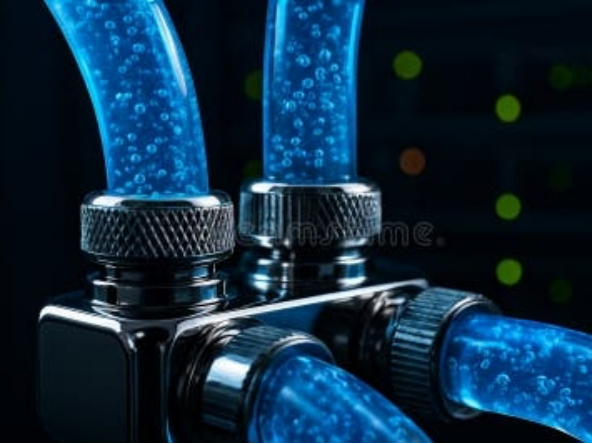
As large-scale AI model training and data center construction continue to accelerate, the power consumption of AI servers is increasing rapidly, making liquid cooling an essential thermal management solution for next-generation high-performance computing systems. As a key component of the liquid cooling system, the liquid cooling manifold distributes and collects coolant across multiple coolant circuits. Its welding quality directly impacts the sealing performance, reliability, and long-term operational stability of the entire cooling system.
Unlike conventional structural components, liquid cooling manifolds require welds with excellent airtightness, pressure resistance, corrosion resistance, and high consistency for mass production. Any defects such as porosity, cracks, or lack of fusion may result in coolant leakage during long-term operation, affecting the reliability of the entire liquid cooling system. Therefore, achieving high-quality and highly consistent seal welding has become a critical challenge in liquid cooling component manufacturing.
Traditional single-beam laser welding can meet basic joining requirements. However, for liquid cooling manifolds that require high sealing performance, conventional processes may encounter challenges such as excessive spatter, unstable weld pools, and inconsistent weld quality. As AI server liquid cooling components move toward large-scale production, manufacturers are placing greater emphasis on welding stability, process repeatability, and production efficiency rather than simply achieving a welded joint.
To address these challenges, Adjustable Beam Profile (ABP) laser welding technology provides an advanced solution for high-precision seal welding applications.
Unlike traditional single-beam laser welding, ABP technology combines a center beam with a ring beam to achieve optimized energy distribution. The center beam provides stable penetration, while the ring beam enables preheating and controlled cooling around the weld area. This coordinated energy input stabilizes the weld pool, reduces thermal gradients, minimizes spatter and porosity, and improves weld bead formation and consistency.
The system supports multiple beam profiles as well as both continuous-wave and modulation welding modes, allowing welding parameters to be optimized according to different materials and joint structures. It is suitable for seal welding of stainless steel and aluminum alloy liquid cooling manifolds, while also supporting precision welding applications such as busbars and sealing plugs.
Based on ABP beam shaping technology, HGLaser has developed an automated laser welding solution specifically designed for AI server liquid cooling manifold manufacturing. By integrating advanced laser sources, intelligent process control, and automated production systems, the solution achieves a balance between high welding quality and efficient production.
The equipment integrates a vision positioning system that automatically identifies welding positions. Combined with oscillation welding technology, it enables continuous and uniform weld bead formation while reducing defects caused by missed welding or incomplete fusion. During the welding process, real-time weld monitoring tracks process conditions and dynamically optimizes welding parameters, further improving production consistency and reducing defects such as spatter, porosity, and undercut. The first-pass NDT qualification rate can exceed 99%.
The system is compatible with multiple materials, including 304 stainless steel and 3000-series and 6000-series aluminum alloys. Welding processes can be quickly adjusted according to different product requirements. In addition, the equipment can be integrated with automated loading and unloading systems to support continuous and high-volume production of liquid cooling components.
For 304 stainless steel manifolds, the solution performs single-sided autogenous laser seal welding on 3 mm-thick SUS304 fittings and housings. The welded joints successfully pass dye penetrant inspection (PT) and radiographic testing (RT), with no leakage or internal defects detected. During a 10-bar nitrogen pressure retention test for 24 hours, the overall pressure drop remains below 2%. The weld joints achieve a tensile strength exceeding 12 kg, with uniform weld bead formation and no obvious defects such as porosity, cracks, or undercut.
For aluminum alloy manifolds, the process joins 1 mm-thick 3000-series aluminum fittings with 3 mm-thick 6000-series aluminum housings. The welding process achieves stable penetration depth exceeding 1.5 mm, while controlling weld width within 3.6 mm. The completed assemblies pass a 0.7 MPa compressed-air leak test with no leakage detected. The weld surface remains smooth and free from spatter, internal porosity, delamination, or other welding defects.
As liquid cooling technology becomes increasingly important for AI servers, the manufacturing of liquid cooling components is moving toward higher quality, greater consistency, and increased automation. Focusing on critical components such as liquid cooling manifolds, HGLaser continues to optimize ABP beam shaping laser welding technology while integrating intelligent control systems and automated manufacturing solutions. These advanced technologies provide customers with stable and efficient laser welding solutions, enabling high-quality and large-scale production of liquid cooling components for AI infrastructure.
 share
share


