
Automotive Industry
Laser Solutions for Automotive Manufacturing | HGLaser


 April 29, 2024
 1778 Viewed
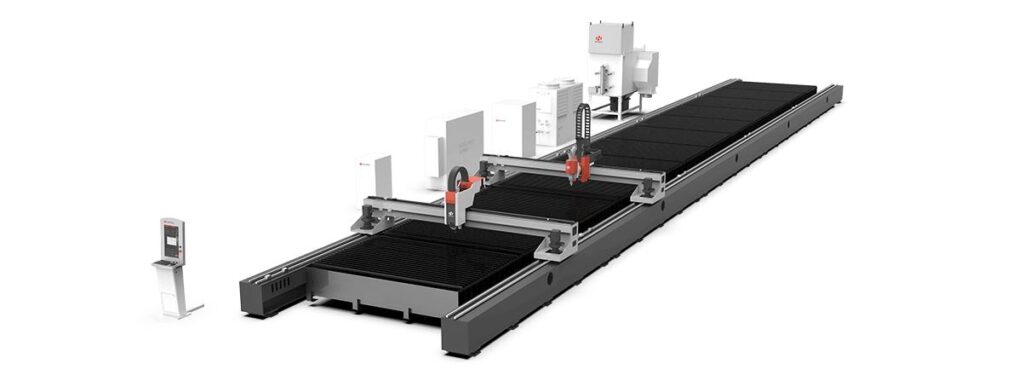
The shipbuilding industry is a major consumer of metal welding and cutting, with them being among its primary processes. In recent years, with fierce market competition, declining profits, and higher quality requirements, the shipbuilding industry has placed greater emphasis on manufacturing quality. Shipyard Laser cutting Machine, as an efficient, green, high-quality, and high-precision technology, is the cornerstone of promoting the development of the shipbuilding industry and optimizing shipbuilding processes. It plays an important role in reducing the weight, lowering costs, reducing labor hours, and achieving energy conservation and environmental protection in the shipbuilding industry. Therefore, laser cutting technology aligns with the current trend of large-scale and high-precision manufacturing.
High-quality cutting High cutting efficiency, allowing for quick production turnaround times. Non-contact cutting, reducing tooling costs and maintenance requirements.
1.In the shipbuilding industry, precision in hull segment assembly is crucial, with the structural frame assembly gaps typically limited to within a 1mm range. Previously, shipbuilding companies often used plasma cutting, which required manual trimming during on-site assembly, resulting in inconsistent trimming quality. Additionally, it increased assembly workload, leading to longer assembly cycles. In contrast, using laser cutting machines for material preparation eliminates the need for on-site trimming, reducing labor and material waste. It significantly accelerates assembly speed and enhances its quality.
2.In recent years, "precision shipbuilding" and "rapid shipbuilding" have become the primary trends in the industry. Laser cutting technology has experienced rapid development, accounting for over 70% of the entire laser processing industry. The shipbuilding sector primarily relies on steel plate, and the use of laser-cutting technology for processing these materials can replace some complex cutting methods based on large mold. This significantly shortens the production cycle and reduces costs.
3. Currently, CO2 laser cutting technology is the most common manufacturing and processing method used in shipbuilding worldwide. Additionally, with the development of domestic manufacturing industries, fiber laser technology has also seen rapid growth. Many domestic manufacturers have either entered or are preparing to enter the research and development phase for configuring fiber laser-equipped CNC laser cutting machines. Furthermore, to adapt to different conditions and environments, laser cutting technology is often combined with robots to form robot cutting systems. The integration of robot and laser is currently the mainstream trend in the shipbuilding industry and even the entire manufacturing sector.
1. High Cost: Laser cutting still incurs relatively high costs.
2. Incompatibility with Manufacturing Characteristics: Big-scale laser cutting equipment is not suitable for the manufacturing characteristics of the shipbuilding industry, such as on-site construction, segmented operations, and complex working environments.
3. Efficiency: Laser cutting does not show a significant advantage in improving efficiency, especially for thick plate cutting in the shipbuilding industry.
4. Complex Maintenance: Laser equipment maintenance is complex, requiring skilled workers and high costs.
To address these issues, HGTECH has proposed a series of solutions aimed at boosting the high-quality development of the shipping industry.
Given the current industry landscape, with the gradual decline in prices and the improvement of intelligent levels, laser cutting technology will gradually be widely applied in the shipbuilding industry. It will also further meet the needs of the shipbuilding industry, moving towards higher quality, lower costs and increased intelligence.
 share
share


